Race - A Social Construct
Understanding Race as a Tool of Social and Political Organisation

Dear readers,
This essay is also available in audio form, narrated by me, for paid subscribers, an alternative way to experience the piece through voice, tone, and emphasis that extend beyond the writing.
“Race is the child of racism, not the father.” — Ta-Nehisi Coates
Being the average African, race was not a concept I heard of immediately. People did not seem different because of their skin colour. I mean, sure, there were distinctions, some Africans have a lighter skin tone, some have a darker skin tone, so I would say I was aware of the different pigmentation and the colorism that accompanied it, but I was not aware of oppression based on skin colour.
We’re all the same, just different fonts. Or so I thought.
When I heard of racism for the first time, I was taken aback. For the life of me, I could not understand how one could hate someone based on their skin colour. I found it primitive and shallow. This was all before I learned of the trans-Atlantic slave trade and how deep that hatred went. The hatred for African people.
The educational system in my home country is nothing to write home about, so I was not privy to important information, and I resorted to self-educating to really understand race and racism.
Racism is defined as “prejudice, discrimination, or antagonism by an individual, community, or institution against a person or people on the basis of their membership of a particular racial or ethnic group, typically one that is a minority or marginalized.”
And what a ridiculous concept it is.
Homo Sapiens first appeared 200,000 to 300,000 years ago in Africa, fossil evidences from places like Ethiopia shows some of the earliest known humans who looked anatomically like us.
However this requires people to understand evolution, which has become impossible because of religion. Religion paints one story, science paints another, and people are divided about what is real and what is not.
To the religious people, religion will not be the guiding factor of this article, as I will be relying only on science.
EVOLUTION
We, humans, did not wake up one sunny day being highly intelligent and functioning beings, we evolved over millions of years from early hominins.
There were the Australopithecus (early upright walkers), the Homo habilis (tool users), and the Homo erectus (first to leave Africa). Each step involved changes in the brain, walking abilities, and the use of tools.
At around 60,000 to 70,000 years ago, some groups of Homo Sapiens began to migrate from Africa to areas in the Middle east, Europe, Asia, and eventually the americas - Read More
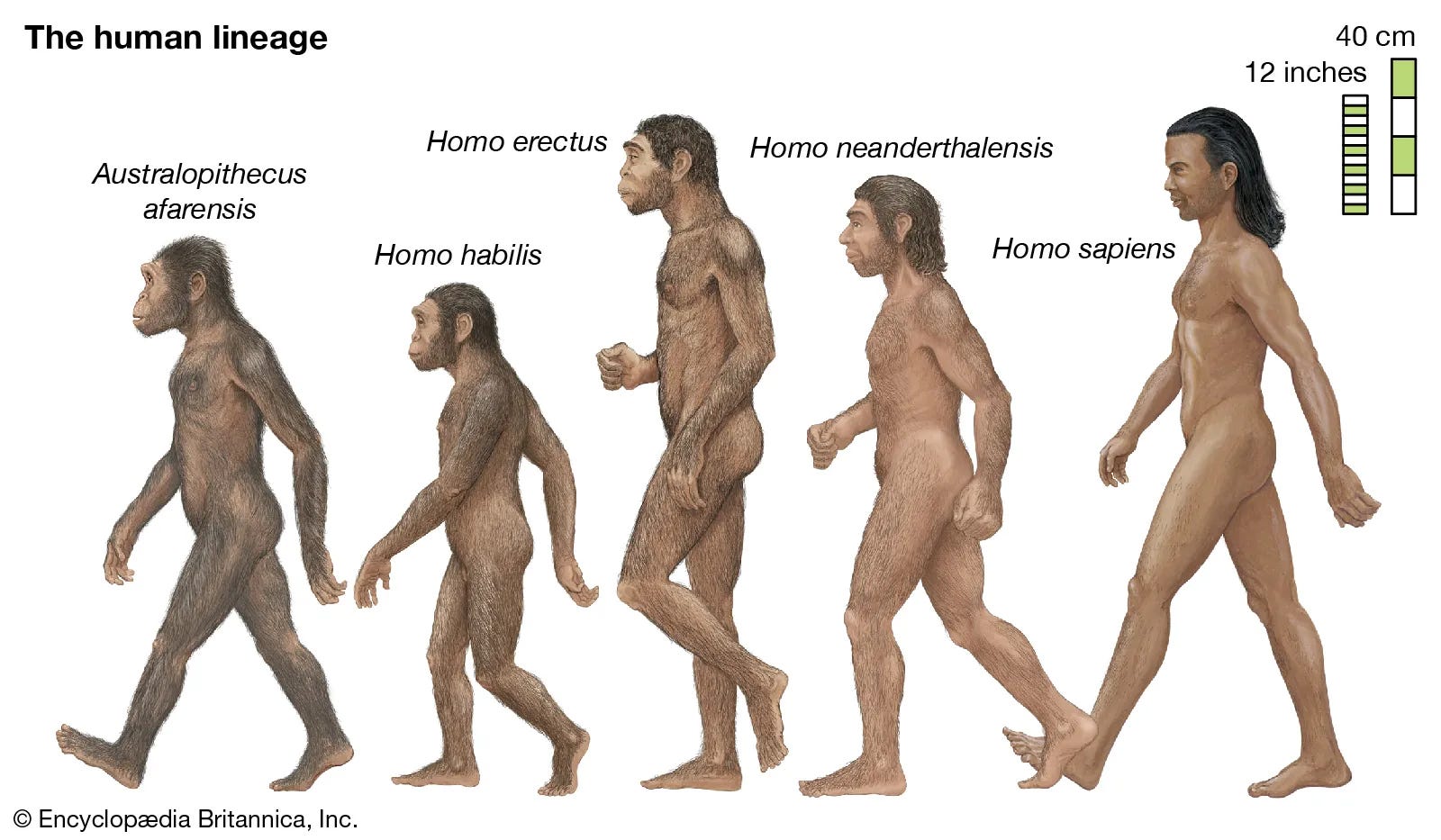
As they spread, Homo sapiens encountered other human species like:
Neanderthals (Europe & Middle East) and Denisovans (Asia), These were early humans that migrated out of Africa long before modern humans existed. They interbred with Homo Sapiens, leaving genetic traces in modern humans. Over time, these early humans disappeared, leaving Homo Sapiens as the only surviving species.
ADAPTATION
As humans moved into new climates, their bodies adapted over thousands of years. One of the most visible adaptations is skin colour, which is directly linked to ultraviolet (UV) radiation from the sun. In regions close to the equator, where UV exposure is intense, darker skin developed as a protective mechanism.
High levels of melanin help shield the body from harmful radiation and prevent the breakdown of essential nutrients like folate.
And the humans that moved further away from the equator into regions with lower sunlight, lighter skin evolved to allow for more efficient vitamin D production in environments with limited UV exposure.
Another physical feature is the shape of the nose. This varies significantly across populations and is closely tied to climate. In colder, drier environments, narrower noses developed to help warm and humidify the air before it reaches the lungs. In warmer, more humid climates, broader noses are more efficient for airflow.
Facial structure as well, In regions with extreme cold, wind, or high levels of reflected sunlight (such as snowy landscapes), certain eye shapes evolved to provide protection and reduce glare.
Even biological adaptations occurred internally. Populations living in high-altitude region developed unique physiological traits that allow them to survive in environments with lower oxygen levels. These include increased lung capacity or more efficient oxygen usage, which is clear evidence that the human body is highly responsive to its environment.
Different groups developed languages, traditions, tools and technologies, ways of life (hunting, farming, nomadic, etc.)
So we could say this is where human diversity truly expanded, not just physically, but culturally.
What is crucial to understand is that these adaptations exist on a continuum. There are no clear biological boundaries that define “races.” Instead, there is a spectrum of traits shaped by migration and environment over time.
Skin colour, facial features, and body structure were simply ways the human body learned to survive different parts of the world.
Of course this is merely a summary of the evolution and adaptation process of early humans, and Homo Sapiens. However this reflection of the past is needed to fully understand the absurdity of race as a construct.
“Human genetic variation is continuous, not discrete; there are no clear boundaries that correspond to racial categories.” — Richard Lewontin
The Birth Of Race
Race is defined as a categorisation of humans based on shared physical or social qualities into groups generally viewed as distinct within a given society. The term came into common usage during the 16th century, when it was used to refer to groups of various kinds, including those characterised by close kinship relations.
When the Europeans began exploring Africa in the 15th century for a combination of economic, political, and religious reasons. They sought direct access to African gold, ivory, and other resources, aiming to bypass the Middle Eastern and North African intermediaries who controlled trade.
European kingdoms competed with themselves, each nation seeking expansion through colonial foothold. The church and monarchs were interested in converting Africans to christians, and that created the idea of exploring Africa, framing it as a commercial venture and holy mission.
During multiple visits to Africa, the europeans started to note the differences, the skin colour, facial features, and hair textures. They would record their observations in journals, maps and illustrations. Observed through the European cultural and religious lens, these differences were unfamiliar, and therefore demonised.
They quickly associated Africans with inferiority, and although racial hierarchy was not formed yet, these observations laid the groundwork for race as a construct.
Writers such as André Thevet, Peter Martyr d’Anghiera, and other chroniclers described people in ways that emphasised difference rather than similarity, creating a framework for comparison.
Chronicle of the Discovery and Conquest of Guinea (1453)
“They were black, and so ugly… that they seemed the images of a lower hemisphere.”
Description of Africa (1526)
“The people of Negro-land are of a good nature, and much addicted to pleasure…”
Decades of the New World
“They go naked… and live like beasts, without law or religion.”
The Interesting Narrative (1789)
“I was now persuaded that I had got into a world of bad spirits… their complexions differing so much from ours.”
(16th-century English writer discussing Africans)
“The blackness of the Ethiopians… is the result of divine punishment.”
These early categorisation introduced the notion that humans could be ranked. Europeans would frame themselves as superior and civilised, and would frame non-europeans as “savages” or “heathens”.
What started as observations and descriptions became a tool for colonialism, justification of domination, and slavery.
Religion was not brought to Africa with good intent, it was part of a ploy to exploit and control Africans, and I must say, it worked.
In decrees such as Dum Diversas and Romanus Pontifex, issued by Pope Nicholas V, the capture and enslavement of non-Christians was not only permitted but endorsed.
Enslavement was reframed as salvation, missionaries described Africans as living in “darkness,” positioning European intervention not as violence, but as moral responsibility.
In missionary correspondence, Africans were not always described with open hostility, but with something more insidious, paternalism. They were seen as souls to be saved, minds to be shaped, and cultures to be corrected. In this framing, domination did not appear as violence, but as virtue.
Carl Linnaeus, a pioneer of modern taxonomy, divided humans into categories based on geography and physical traits, such as Homo Europaeus, Homo Afer, and Homo Asiaticus.
However, his classifications extended beyond physical description, as he assigned behavioural and moral characteristics to each group, filled with bias and presented as scientific observation. The europeans were described as rational and governed by laws, while Africans were portrayed as impulsive or governed by emotion.
Later on, Johann Friedrich Blumenbach expanded on these ideas, proposing five racial categories, including “Caucasian,” “Mongolian,” and “Ethiopian.” While often credited with early anthropology, Blumenbach’s work further solidified the notion that humanity could be divided into distinct groups based on physical traits. Of course, this emphasised on the European superiority complex in comparison to Africans.
Over the years, these classifications were simplified into groupings such as “Caucasoid,” “Mongoloid,” and “Negroid.”
These labels became widely accepted and were used in academic, political, and social contexts. Yet they were based on superficial features like skin colour, skull shape, and facial structure.
These so-called scientific categories ignored the continuous nature of human variation, forcing people into rigid boxes that did not reflect reality in the slightest.
Racism and Colonialism
When the trans-Atlantic slave trade began in the early 1500s as European powers expanded their colonial and commercial ambitions. Portugal, having established early contact along the West African coast, initially engaged in trade for gold, ivory, and other resources, but quickly recognised the economic potential of human labour.
European plantations in the Americas, particularly in Brazil and the Caribbean required a massive workforce to cultivate sugar, tobacco, and other cash crops. Indigenous people were often decimated by disease, warfare, and harsh labour conditions, creating a labour shortage that Europeans sought to fill with enslaved Africans.
Africa, the continent, was made up of numerous independent kingdoms, communities, and ethnic groups, each with its own political structures, languages, and interests. There was no shared identity of Africans in the way the term is used today.
In this context, some local rulers and traders participated in the trade by selling prisoners of war, captives from raids, or individuals from rival groups.
These were often the result of existing conflicts between different societies, not acts of a collective people selling their own. Europeans inserted themselves into these dynamics, and too quickly intensified them, turning what had been smaller-scale, localised systems of captivity into a large-scale, trans-Atlantic industry.
The first large scale shipments were sent from West Africa to Portugal, Spain, and later to the Americas. Over time, the trade grew exponentially, with Britain, France, the Netherlands, and other nations joining the market.
Over the 16th and 17th centuries, European powers formalised agreements with African kingdoms and local traders, exchanging goods such as firearms, textiles, and alcohol for enslaved people. Captives were often prisoners of war, debtors, or victims of raiding, but the scale of capture expanded as Europeans instituted systematic slaving networks along the coast.
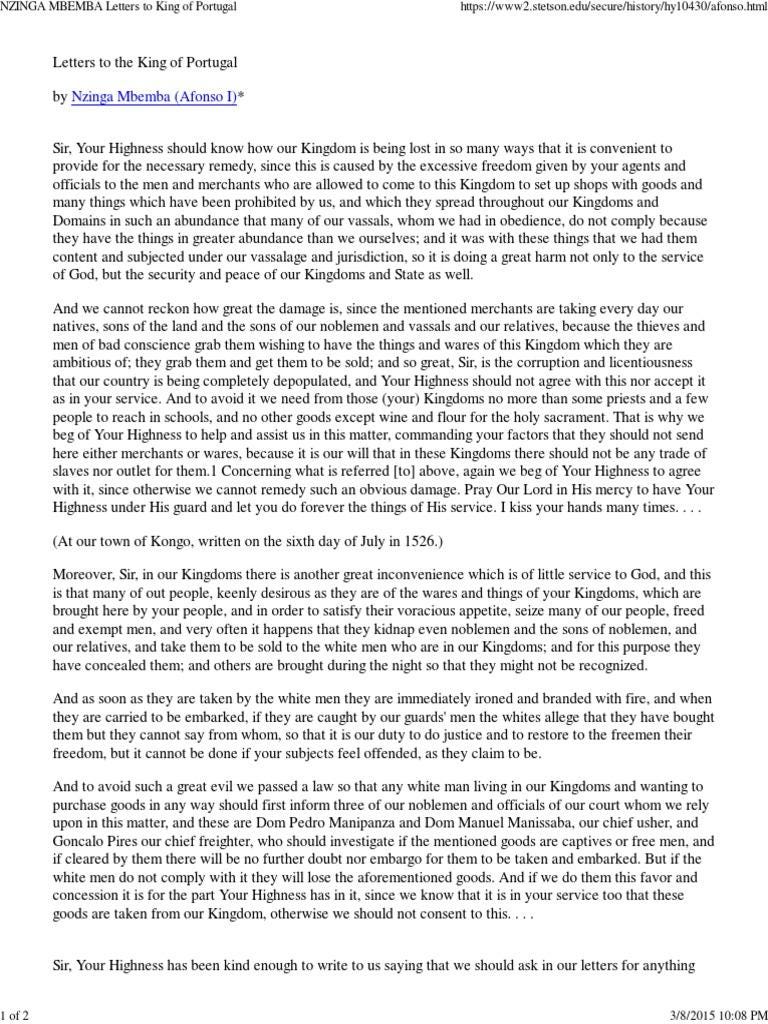
By the 18th century, European traders had developed coastal forts and trading posts, effectively controlling the flow of captives from interior Africa to ports, where they were shipped across the Atlantic under horrific conditions known as the Middle Passage.
It is very interesting how “race” was biologically non-existent until the Europeans wanted to exploit Africans. When European powers needed justification for the mass enslavement and exploitation of African peoples that race became a social reality.
Discussions emerged claiming that one ethnic group was superior to another, with pseudo-scientific arguments such as the size of skulls determining intelligence used to legitimise oppression.
Pathetic, really.
Europeans created a self-reinforcing system that divided humanity and justified exploitation, embedding inequality into the very structures of society.
“Slavery made race real. It transformed observed differences into a hierarchy that justified brutal exploitation.” — Saidiya Hartman, Lose Your Mother
There is no race. Or better yet, there is just one race. The human race.
Modern genetics has since dismantled these ideas. Humans share approximately 99.9% of their DNA, and the variation that does exist is gradual and overlapping, not divided into clear boundaries.
There is no genetic basis for dividing humanity into discrete races. What earlier scientists presented as biological truth has been exposed as a constructed framework, shaped by the social and economic conditions of its time.
There is only ethnicity and culture. What we call “race” is a social invention, created to divide, categorise, and control people for political and economic purposes.
Black, brown, white… These are all melanin and the absence of.
Human beings are biologically one species. The differences in skin colour, hair, or facial features are merely adaptations to environment, not indicators of worth, intelligence, or moral capacity. The fabrication of race was to fabricated to justify slavery, colonialism, and systemic oppression.
And this fact was well known to Europeans, which is why they forced people from different ethnicities to reproduce, severing connections with their true identities and cultures.
Slavery was a callous act that can never be justified by any means. The atrocities committed went far beyond mere greed or economic calculation, they were rooted in white supremacy, domination, and hatred.
Enslaved people were dehumanised, stripped of heritage, family, and autonomy, all in service of a system designed to assert racial hierarchy and maintain power.
The false science of race did not end when textbooks updated or when anthropologists abandoned outdated classifications. It stretches into the present, embedded in education, social perception, and systemic inequality. The idea that skin colour, facial features, or hair texture indicate value or intelligence continues to shape the way societies judge, educate, and treat people.
In countries with underfunded schools that ignore historical truths, young people often grow up internalising hierarchy, even unconsciously.
So without deliberate intervention, these misconceptions are passed from generation to generation, and the cycle repeats.
“A lack of historical and scientific literacy allows old prejudices to masquerade as common sense. Misunderstanding biology becomes a tool of social control.”
— Joseph L. Graves
Unlock the narrated audio version of this essay by becoming a paid subscriber.
Keep reading with a 7-day free trial
Subscribe to Sarah Writes to keep reading this post and get 7 days of free access to the full post archives.